从隧道效应到量子计算机:解读2025年诺贝尔物理学奖

De l’effet tunnel aux ordinateurs quantiques : décryptage du prix Nobel de Physique 2025

CEA Enterprise 2025-11-13 07:00 Original
摘要
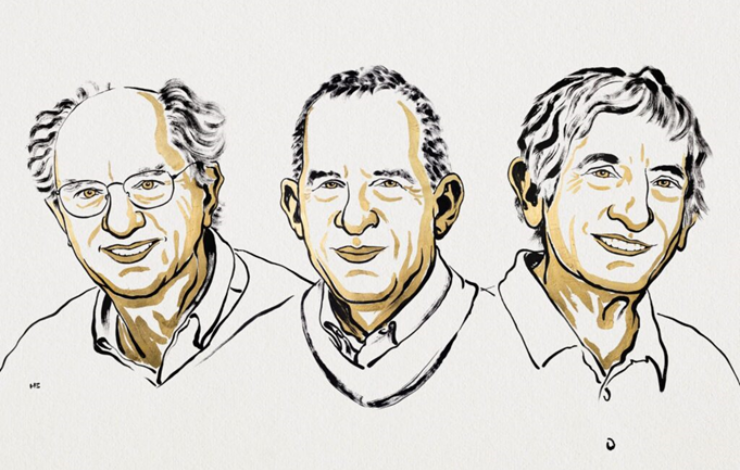
2025年诺贝尔物理学奖授予约翰·克拉克、米歇尔·德沃雷和约翰·马丁尼斯,以表彰他们在宏观量子力学领域的开创性研究。他们的工作为量子计算和量子信息处理奠定了重要基础,其中法国原子能和替代能源委员会(CEA)在该领域的贡献尤为突出。

2025年诺贝尔物理学奖授予约翰·克拉克、米歇尔·德沃雷和约翰·马丁尼斯,以表彰他们在宏观量子力学领域的开创性工作。他们的研究为量子计算机的发展奠定了关键基础。

奖项的核心在于表彰三位科学家在理解和控制宏观尺度量子系统方面的贡献。他们的工作证明了量子效应不仅存在于微观粒子,也能在精心设计的宏观电路中显现和操控,这直接推动了超导量子比特的实用化。

约翰·克拉克早在20世纪80年代就通过实验观测到了宏观量子隧道效应,首次在实验中展示了超导电路中的量子行为。米歇尔·德沃雷则在理论上深化了对这些宏观量子系统的理解,并设计了关键实验来探测量子态。约翰·马丁尼斯的工作最具应用导向,他领导的团队在2019年首次实现了“量子霸权”,即量子计算机在特定任务上远超经典计算机,这标志着领域从理论走向工程实践的重要转折。

法国原子能与替代能源委员会(CEA)在该领域的研究中扮演了重要角色。其旗下研究所早在20世纪90年代就开始了超导量子比特的研究,并与获奖者密切合作。CEA在材料科学、纳米制造和极低温技术方面的专长,为制造稳定、可控的量子比特提供了必要条件。

这项研究的意义深远。它不仅是基础物理学的突破,更开辟了量子计算的新路径。基于超导电路的量子处理器已成为当前构建量子计算机的主流方案之一,吸引了谷歌、IBM等科技巨头的巨额投资。未来,该技术有望在药物研发、材料科学和密码学等领域带来革命性变化。

诺贝尔奖委员会指出,获奖工作“从发现基础量子现象到演示可扩展量子处理器”,完整展现了一个新计算范式的诞生历程。

Summary
The 2025 Nobel Prize in Physics was awarded to John Clarke, Michel Devoret, and John Martinis for their pioneering work in macroscopic quantum mechanics. The research, which has major implications for quantum computing, was significantly advanced by contributions from France's CEA (Atomic Energy Commission).

Nobel Prize in Physics 2025 Awarded for Pioneering Macroscopic Quantum Mechanics and Quantum Computing Foundations

The 2025 Nobel Prize in Physics has been jointly awarded to John Clarke, Michel Devoret, and John Martinis for their foundational work in macroscopic quantum mechanics, a field crucial for the development of quantum computers. Their research collectively demonstrated how quantum phenomena, typically observed at atomic scales, can be engineered and controlled in larger, human-made circuits.

The core breakthrough stems from the macroscopic quantum tunneling effect in Josephson junctions—a key component in superconducting circuits. John Clarke’s early work in the 1980s provided the first experimental evidence of this effect, proving that quantum states could exist and be measured in millimeter-scale systems. This laid the experimental groundwork for using such junctions as quantum bits, or qubits.

Building on this, Michel Devoret and John Martinis made seminal contributions to controlling these quantum states. Devoret’s research, particularly at Yale University and in collaboration with France’s Atomic Energy Commission (CEA), focused on the theory and design of superconducting qubits and circuits to protect quantum information from decoherence. John Martinis, while at the University of California, Santa Barbara, and later Google, led teams that achieved major experimental milestones, including demonstrating high-fidelity quantum logic gates and, famously, quantum supremacy in 2019.

The Nobel committee highlighted that their combined work transformed quantum mechanics from a purely theoretical or microscopic discipline into an engineering science. It enabled the development of the superconducting qubit architecture, which is now the leading platform pursued by major companies like Google, IBM, and Intel for building scalable quantum processors.

The award also underscores significant French contributions to the field, notably through a long-standing collaboration between Michel Devoret and the CEA. Teams at CEA Paris-Saclay have been instrumental in advancing the design and fabrication of complex quantum circuits, contributing to European efforts in the global quantum computing race.

This prize recognizes a decades-long journey from fundamental quantum discovery to a technology with transformative potential, cementing the path from theoretical quantum phenomena to the emerging era of quantum computation.
Résumé
Le Prix Nobel de Physique 2025 récompense John Clarke, Michel Devoret et John Martinis pour leurs travaux fondateurs en mécanique quantique macroscopique, un domaine clé pour le développement des ordinateurs quantiques. Leurs recherches, auxquelles le CEA a contribué de manière significative, ont permis des avancées décisives dans la manipulation et la mesure des états quantiques. Cette distinction souligne l'impact technologique et industriel croissant de l'informatique quantique.

Le Prix Nobel de Physique 2025 a été attribué à John Clarke, Michel Devoret et John Martinis pour leurs travaux pionniers en mécanique quantique macroscopique. Retour sur les origines de cette découverte, décryptage des recherches récompensées et mise en lumière des contributions majeures du CEA au domaine du quantique.

AI Insight
Core Point

2025年诺贝尔物理学奖授予John Clarke、Michel Devoret和John Martinis,表彰其在宏观量子力学与量子隧穿方面的开创性研究,这对量子计算等前沿技术具有基础意义。

Key Players

John Clarke — 物理学家,英国出生、美国加州大学伯克利分校相关。

Michel Devoret — 物理学家,法国出生、美国耶鲁大学/量子研究相关。

John Martinis — 物理学家,美国加州大学圣塔芭芭拉分校相关。

CEA — 法国替代能源与原子能委员会,法国。

Industry Impact
  • Computing/AI: High — 为量子计算的物理基础提供关键突破
  • ICT: Medium — 可能推动未来计算与通信技术演进
Tracking

Strongly track — 该奖项强化量子技术路线的学术与产业关注度,可能影响中长期算力竞争。

Highlights
Tech Breakthrough Local Research
Related Companies
CEA-Leti
CEA-Leti mature
positive
Categories
人工智能 科研
AI Processing
2026-03-31 11:04
deepseek / deepseek-chat