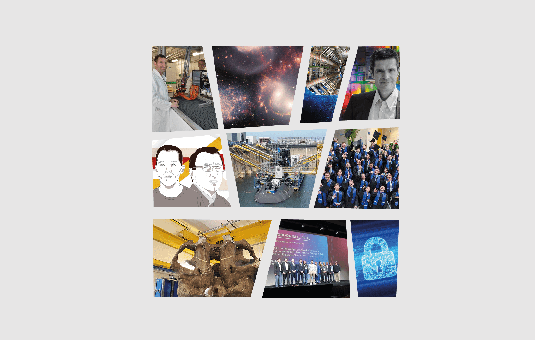
The French Alternative Energies and Atomic Energy Commission (CEA) highlights a year of significant scientific milestones and celebrations in 2022. Here are the top ten developments that defined its year.
A major focus was on energy sovereignty and innovation. The CEA inaugurated its first industrial-scale electrolyzer gigafactory, McPhy, in Grenoble, marking a strategic push into large-scale clean hydrogen production. In nuclear energy, the Commission celebrated the 40th anniversary of its Astrid fast-neutron reactor project and advanced new fuel cycle research, including a pioneering experiment dissolving used MOX fuel. It also launched the France 2030 "Nuclear Platforms" program to accelerate reactor design and safety testing.
Quantum computing saw substantial progress with the commissioning of the second-generation "Quantinuum H1-2" quantum computer at its Very Large Computing Center (TGCC), enhancing France's high-performance computing capabilities. In health and technology, the CEA developed an ultra-fast, high-resolution MRI technique and a novel electronic nose for non-invasive disease detection via breath analysis. Its research into perovskite solar cells achieved a record 24% efficiency, while a new method for creating ultra-pure silicon crystals promises advances in power electronics.
The year also honored scientific legacy, commemorating the 100th anniversary of the discovery of the Compton effect, and celebrated the 30th anniversary of the French Network of Technology Research Institutes (RTR), which includes CEA Tech. These achievements collectively underscore the CEA's role in driving research across energy, computing, health, and materials science.